
Kostaryka Los Duran Obata Black Honey (250g)
- Price per 1kg:316.00 zł
Ships within 1 business day
Kostaryka Los Duran Obata Black Honey
Los Durán is one of those coffees we keep coming back to. For several seasons now, we’ve been selecting successive batches from the Durán family, exploring the same farm through different botanical varieties and processing methods.
We’ve already sampled F1 Centroamericano, H1, H17, and Victoria 04. This year, we chose Obata processed with Black Honey. A new variety, a well-known producer, and a coffee that once again reminds us why Los Durán returns to our offerings.
Taste Profile
- Cherry
- Red grape
- Cocoa
- Tangerine
- Sweetness
- ⬤⬤⬤⬤◯
- Acidity
- ⬤⬤⬤◯◯
- Bitterness
- ⬤◯◯◯◯
- Roast level
- ⬤⬤◯◯◯
Brewing methods
Explorer
Coffees of higher acidity, for enthusiasts of fruity and flowery notes, and for those wanting to try them for the first time.
-
Country
- Costa Rica
-
Region
- West Valley
-
Varietal
- Obata
-
Process
- Black Honey
-
Elevation
- 1600 – 1900 m.a.s.l.
-
Harvest
- 2026
Producer
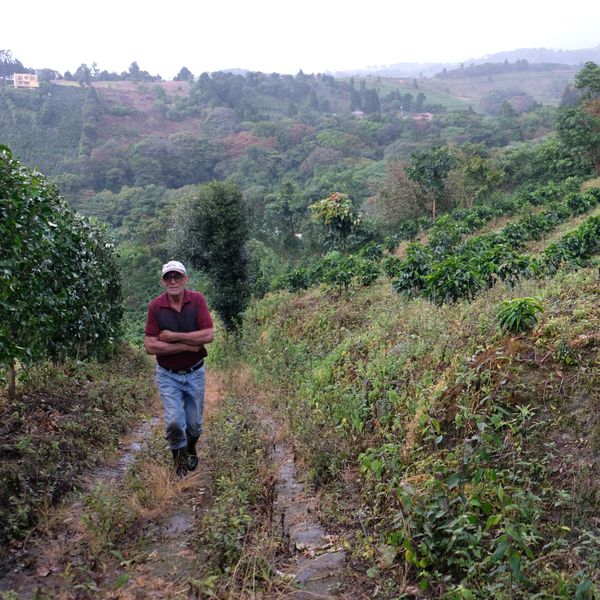
Los Durán is a family-owned micromill run by Eduardo Durán and his three sons: Barney, Kendall, and Arnold. The farm is located in Sarchí, in Costa Rica’s West Valley, a region with a long tradition of coffee production and a large number of small, family-owned farms.
Each family member is responsible for a different part of the operation. Barney handles day-to-day production and processing, while Kendall and Arnold also utilize their engineering expertise to develop the family business.
The Duráns operate on several small plots of land, where they grow traditional varieties such as Catuaí and Caturra, as well as SL28 and more modern hybrids.
A key moment for the farm was the launch of their own micromill. Eduardo and Kendall built it right next to the family home to process and dry the harvested coffees themselves. The decision regarding the technology itself was also crucial. Instead of a mechanical demulsifier, they used a traditional depulper. This allows for a larger amount of mucilage to remain on the parchment, which is particularly important for honey processing.
They also have access to raised tables and a greenhouse. This allows the entire process, from freshly picked cherries to dried parchment, to remain in the hands of one family.
Varietal
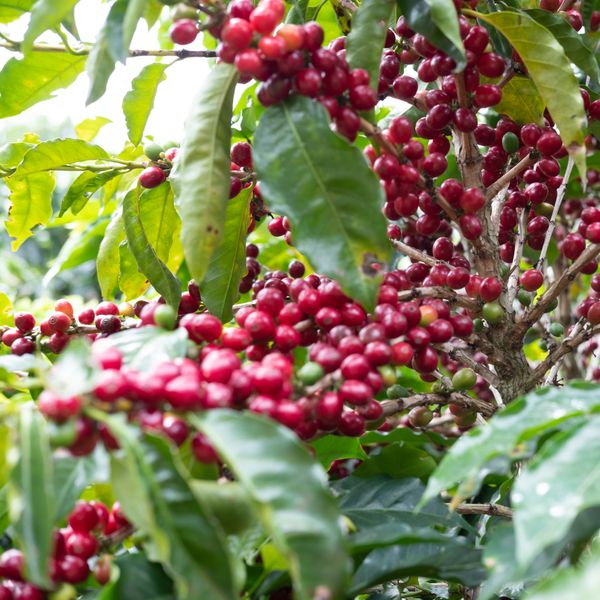
Obata belongs to a group of varieties developed with a focus on combining high productivity, resistance, and quality potential.
However, at Los Durán, it is not solely considered a commercial variety. The family operates it as a separate microlot and conducts it through extensive Black Honey processing. As a result, the coffee’s character stems not only from its genetics and growing conditions, but also from a series of decisions made after harvest.
Processing
Los Durán’s Black Honey is a multi-stage process.
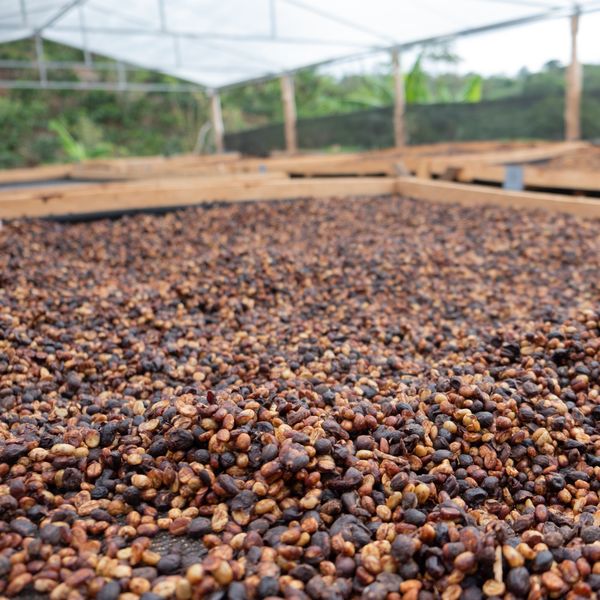
After harvesting, the ripe cherries are left whole for approximately 12 hours. Only then are they depulped. The skin is removed, but the mucilage remains on the parchment paper. The coffee then rests for approximately another 24 hours. After this stage, it is placed on raised tables, where it remains covered for the first 24 hours.
Further drying takes approximately 21 days. Throughout this period, the full layer of mucilage remains on the parchment. This distinguishes this batch from simpler honey processing. The producer deliberately retains a larger amount of fruit material during drying and gradually reduces moisture on raised tables.
In practice, this means a significantly greater number of decisions between harvest and the end of drying: the length of the whole fruit rest, the moment of depulping, the duration of the next resting stage, the amount of mucilage left, and the duration of the three-week drying process. At Los Durán, all these stages are carried out in a single micromill. This level of control over processing is one of the most interesting elements of this coffee.

How to brew it?
The fruity and acidic character of this coffee is definitely best highlighted using a V60 dripper.
We recommend a slightly coarser grind but a longer extraction time. This will help bring out the complexity of the brew.
Chemex or French press are also great choices — we encourage you to experiment and find your favorite brewing methods for our coffees!
Suggested brewing method
-
Ratio
- 60 g of coffee per 1 l of water
-
Water temperature
- 94 °C
-
Grinding
- medium-coarse
-
Brewing time
- 3:30 min
-
Technique
-
- Pour water 5 times in equal parts (i.e. 5× 60g) every 40 seconds.
- Water should pour through coffee bed between each pour.
- If water pours too slow or too fast, grind coarser/finer.
- Use only soft, filtered water!
Frequently Asked Questions
Will lightly roasted coffee for ‘alternative’ brewing work well in espresso?
Lightly roasted coffees are usually not a good choice for espresso – due to their higher acidity it’s diffucult do brew balanced and sweet shot. If you brew with moka pot or espresso machine, we recommed choosing something from our ‘espresso‘ section that offers slightly darker roast profile.
How long does the roasted coffee stay fresh?
We recommend brewing your coffee no later than 3 months post roasting. Ordering in our webshop you have no reason to worry about the freshness – we’re a coffee roastery after all! ;)
What type of water should I use for brewing? Does it matter at all?
Filter coffee has over 98,5% water content. It is crucial for cup quality. Especially for delicate, floral and fruity coffees that have plenty of nuances. To fully enjoy them, we recommend using soft, filtered water with low mineral compound and buffer.
It’s best to use filters dedicated for hard water as it is most common in our taps.
You can also use bottled spring water with mineral compound below 150mg/l.
Will this coffee pair well with milk?
Of course, you can drink your coffee the way you like. However, we recommend trying this coffee solo. It will be fruity, sweet and delicate. Milk or sugar will dominate its profile and cover most of these qualities.
Dripper, chemex, aeropress, or French Press? Which method is best for that coffee?
Great question! There are plenty of brewing methods out there. Don’t worry – over 85% of cup character comes from the beans themselves. Everything else that matter are water, good grinder and your technique. The brewing vessel will have its impact on a final cup character, but not as big as you might think of.
Remember – the most important element of a good coffee is the good coffee itself ;)
What’s the gross price of this coffee per 1 kg?
316 PLN when bought in 250 g boxes.