
Kenia Karimikui AA Natural (250g)
- Price per 1kg:276.00 zł
Ships within 1 business day
Kenia Karimikui AA Natural
This is one of those coffees you buy not because it’s trendy, but because it’s hard to find.
Karimikui AA Natural is a small batch from Kirinyaga, prepared using a processing method that is still less common in Kenya. Two bags. 120 kg. End of story.
Taste Profile
- Red fruit
- Cherries
- Grapefruit
- Whiskey
- Sweetness
- ⬤⬤⬤⬤◯
- Acidity
- ⬤⬤⬤⬤◯
- Bitterness
- ⬤◯◯◯◯
- Roast level
- ⬤⬤◯◯◯
Brewing methods
Explorer
Coffees of higher acidity, for enthusiasts of fruity and flowery notes, and for those wanting to try them for the first time.
-
Country
- Kenya
-
Region
- Kirinyaga
-
Varietal
- SL28, SL34, Batian
-
Process
- Natural
-
Elevation
- 1600 – 1700 m.a.s.l.
-
Harvest
- 2026
Producer
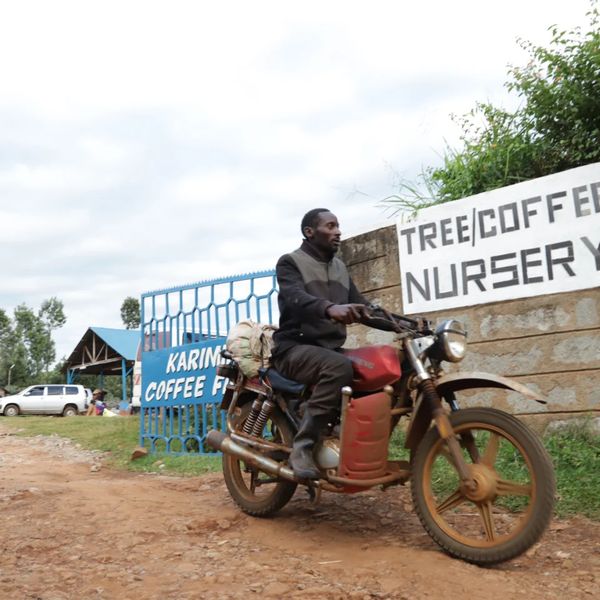
Karimikui Coffee Factory is located on the southern slopes of Mount Kenya, in the Kirinyaga region. The station has been operating since 1966 and is owned by the Rungeto Farmers’ Cooperative Society, which also runs Kii and Kiangoi.
Rungeto has over 2,200 small-scale producers. Farms are small – on average, about 0.1 hectare, according to Trabocca. Coffee grows at an altitude of approximately 1,600–1,700 meters above sea level, on the red volcanic soils characteristic of this region.
In addition to coffee, farmers also grow tea and raise livestock. The cooperative also develops other sources of income, including through milk procurement. This means its operations are not solely based on a single harvest of coffee per year.
Karimikui has been a regular name in specialty roastery offerings for years. However, washed lots are the standard. Ours is different.

Varietal
Karimikui is dominated by SL28 and SL34, which constitute approximately 90% of the varietal material. The remaining 10% is Batian.
SL28 and SL34 have been associated with Kenyan coffee production for decades and perform particularly well in the high-altitude plantations of central Kenya.
Batian is a much younger variety, introduced in 2010. It was developed, among other things, as a response to problems associated with Coffee Berry Disease and coffee rust.
The AA in the name does not denote the variety or flavor rating. It is a Kenyan bean size classification – one of the largest fractions separated during sorting.
Processing
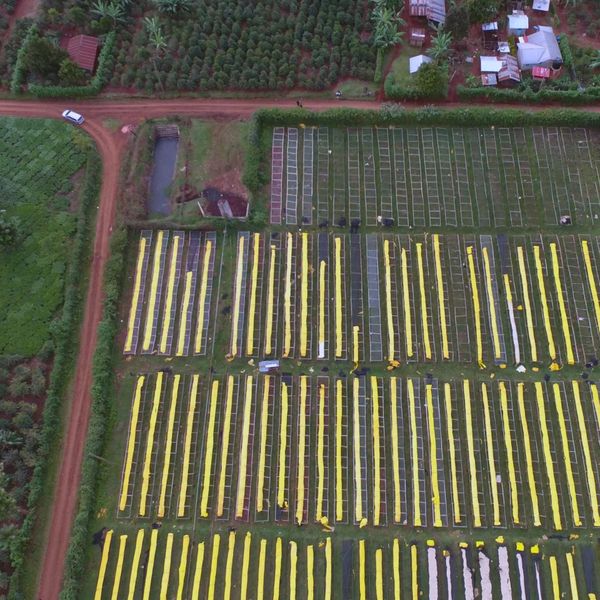
Karimikui is a station primarily associated with washed processing. In the standard process, the berries are sorted and depulped, then the coffee undergoes fermentation for approximately 12-24 hours, washed, and dried on raised tables.
This batch was prepared as Natural.
The whole fruit is dried, skin and pulp intact, without prior depulping. Only after drying is the bean separated from the dried fruit.
This is still a less common route for Kenya, especially for stations like Karimikui, which have built their reputation primarily on washed coffees.

How to brew it?
The fruity and acidic character of this coffee is definitely best highlighted using a V60 dripper.
We recommend a slightly coarser grind but a longer extraction time. This will help bring out the complexity of the brew.
Chemex or French press are also great choices — we encourage you to experiment and find your favorite brewing methods for our coffees!
Suggested brewing method
-
Ratio
- 60 g of coffee per 1 l of water
-
Water temperature
- 94 °C
-
Grinding
- medium-coarse
-
Brewing time
- 3:30 min
-
Technique
-
- Pour water 5 times in equal parts (i.e. 5× 60g) every 40 seconds.
- Water should pour through coffee bed between each pour.
- If water pours too slow or too fasrt, grind coarser/finer.
- Use only soft, filtered water!
Frequently Asked Questions
Will lightly roasted coffee for ‘alternative’ brewing work well in espresso?
Lightly roasted coffees are usually not a good choice for espresso – due to their higher acidity it’s diffucult do brew balanced and sweet shot. If you brew with moka pot or espresso machine, we recommed choosing something from our ‘espresso‘ section that offers slightly darker roast profile.
How long does the roasted coffee stay fresh?
We recommend brewing your coffee no later than 3 months post roasting. Ordering in our webshop you have no reason to worry about the freshness – we’re a coffee roastery after all! ;)
What type of water should I use for brewing? Does it matter at all?
Filter coffee has over 98,5% water content. It is crucial for cup quality. Especially for delicate, floral and fruity coffees that have plenty of nuances. To fully enjoy them, we recommend using soft, filtered water with low mineral compound and buffer.
It’s best to use filters dedicated for hard water as it is most common in our taps.
You can also use bottled spring water with mineral compound below 150mg/l.
Will this coffee pair well with milk?
Of course, you can drink your coffee the way you like. However, we recommend trying this coffee solo. It will be fruity, sweet and delicate. Milk or sugar will dominate its profile and cover most of these qualities.
Dripper, chemex, aeropress, or French Press? Which method is best for that coffee?
Great question! There are plenty of brewing methods out there. Don’t worry – over 85% of cup character comes from the beans themselves. Everything else that matter are water, good grinder and your technique. The brewing vessel will have its impact on a final cup character, but not as big as you might think of.
Remember – the most important element of a good coffee is the good coffee itself ;)
What’s the gross price of this coffee per 1 kg?
276 PLN when bought in 250 g boxes.